Ir al contenido principal

HISTORY OF INFORMATION TECHNOLOGY


Pre-mechanical era (3000 b.c. - 1450 d.c.)


The technology involving the development, maintenance, and use of computer systems, software, and networks for the processing and distribution of data. 
Merriam-Webster


1. Writing:

    -Petroglyphs and pictographs
Resultado de imagen para Petroglyphs and pictographs
    -Ideographs

Resultado de imagen para ideographs
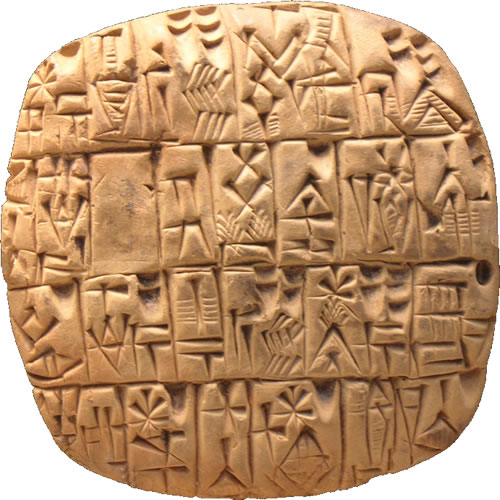
    -Sumerian cuneiform script was the first true writting language and the first information system.

Resultado de imagen para sumerian script
    -Phoenician alphabet

Resultado de imagen para phoenician alphabet

2. Paper:

    -2600 b.c. -The egyptians wrote on the papyrus plant.


3. Books and libraries:

    -The egyptcians kept scrolls
    -The greeks started the folds sheets 


4. First numeric systems:

    -Around 100 a.d -The first 1-9 system was created by people from India
    -875 a.c. -The number 0 was invented.
    -The abacus as the first information processor

Resultado de imagen para first abacus


Comentarios

Entradas más populares de este blog

Mechanical era (1450 - 1840) The mechanical age is when we first start to see connections between our current technology and its ancestors. The mechanical age can be defined as the time between 1450 and 1840.   There were lots of different machines created during this.  A. The first information explotion 1. Johann Gutenberg (Mainz, Germany; c. 1387-1468) . Invented the movable metal-type printing process in 1450. B. The first general purpose (computers) -John Napier – introduces logarithms. He invents logs in 1614. Logs allow multiplication and division to reduced to addition and subtraction. -Wilhelm Shickard – a professor at the University of Tubingen, Germany, invents the first mechanical calculator, it can work with six digits, and carries digits across columns. It works but never beyond the prototype stage. -William Oughtred, an English clergyman, invented the slide rule. Early example of an analog computer. -Blaise Pascal – a French Mat...
The role of computer skills in the formation of modern translator's professional competence Translation tools: Machine translation (MT) --> Substitutes words from a language into another, but cannot produce good translations of a complete text. Computer assisted translation (CAT) --> It's a form of language translation in which a human translator uses a computer software to support and facilitate the translation process.  Terminology management systems: TMS allows translators to create and maintain a personal database of terminology, wich is rederred to as a termbase. Benefits: 1) enhancing and encouraging terminological consistency and thus improve quality of translated texts, 2) prevent translators from undertaking the same terminological searches, 3) translation process is an accelerated due to refuse of previously translated terminology. Localization software: localization involves making the product (e.g. translation project) linguistic...
ICT in The Service of Multiculturalism Contact hypothesis:  1. Lays down the conditions for successful between two or more groups. Equal group status within the situation. Common goals. Intergroup cooperation. Institutional support. 2. Knowledge of differences between groups is not in itself enough to stop prejuice. There are many problems involved with applying contact hypothesis through face-to-face contact. Logistics of group meetings The need to meet with another group from a nearby or easily accessible geographical location. Growing transportation costs. The OICH The online inter-group contact hypothesis (OICH) model is based on an extension of the contact hipothesis to adopt the original contact hypothesis for the online connections between groups in conflict. Be fully supported by each participating institution. Involve collaboration among groups rather than among individuals. Deal with general subjects and not with congflicts Be based on a nee...